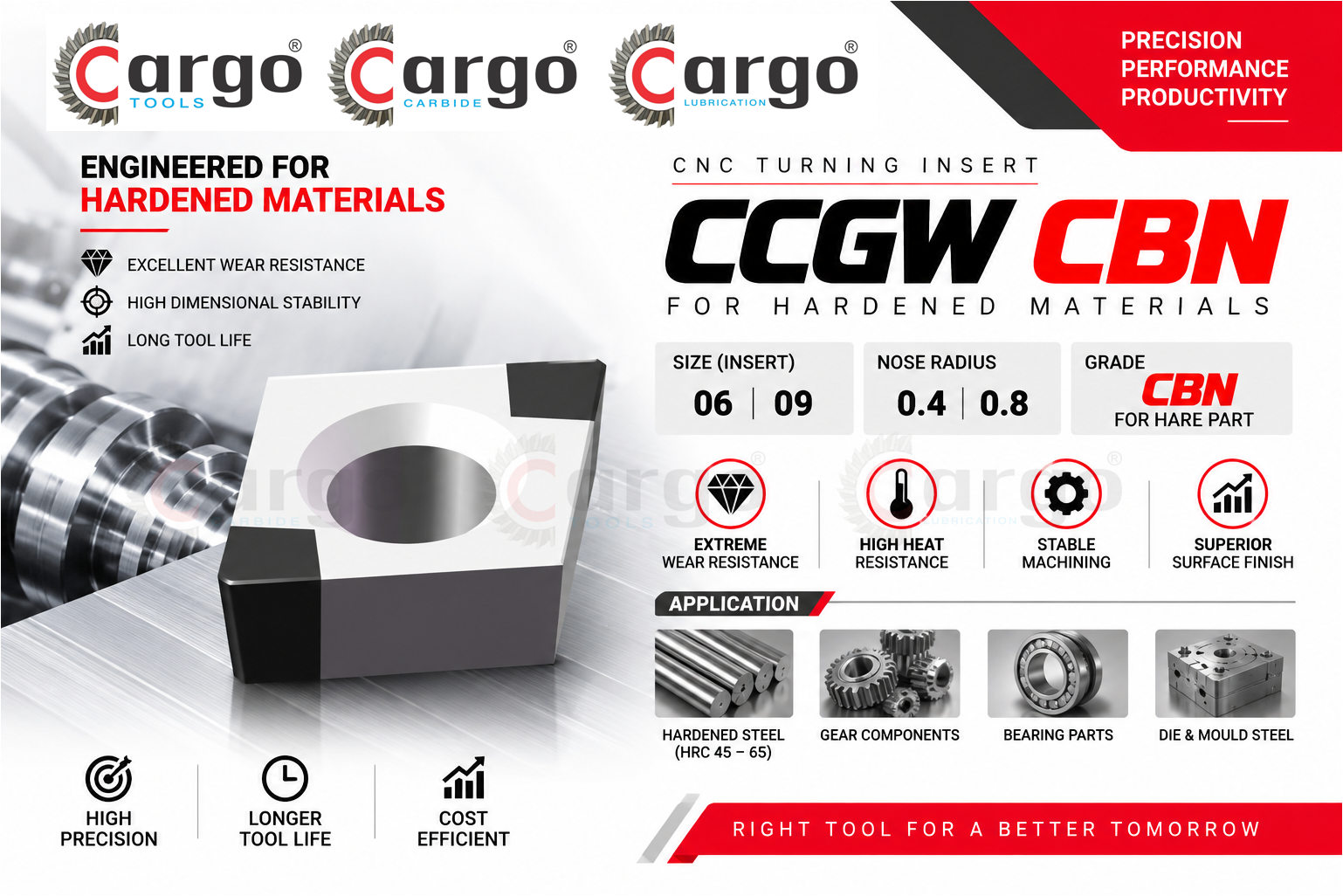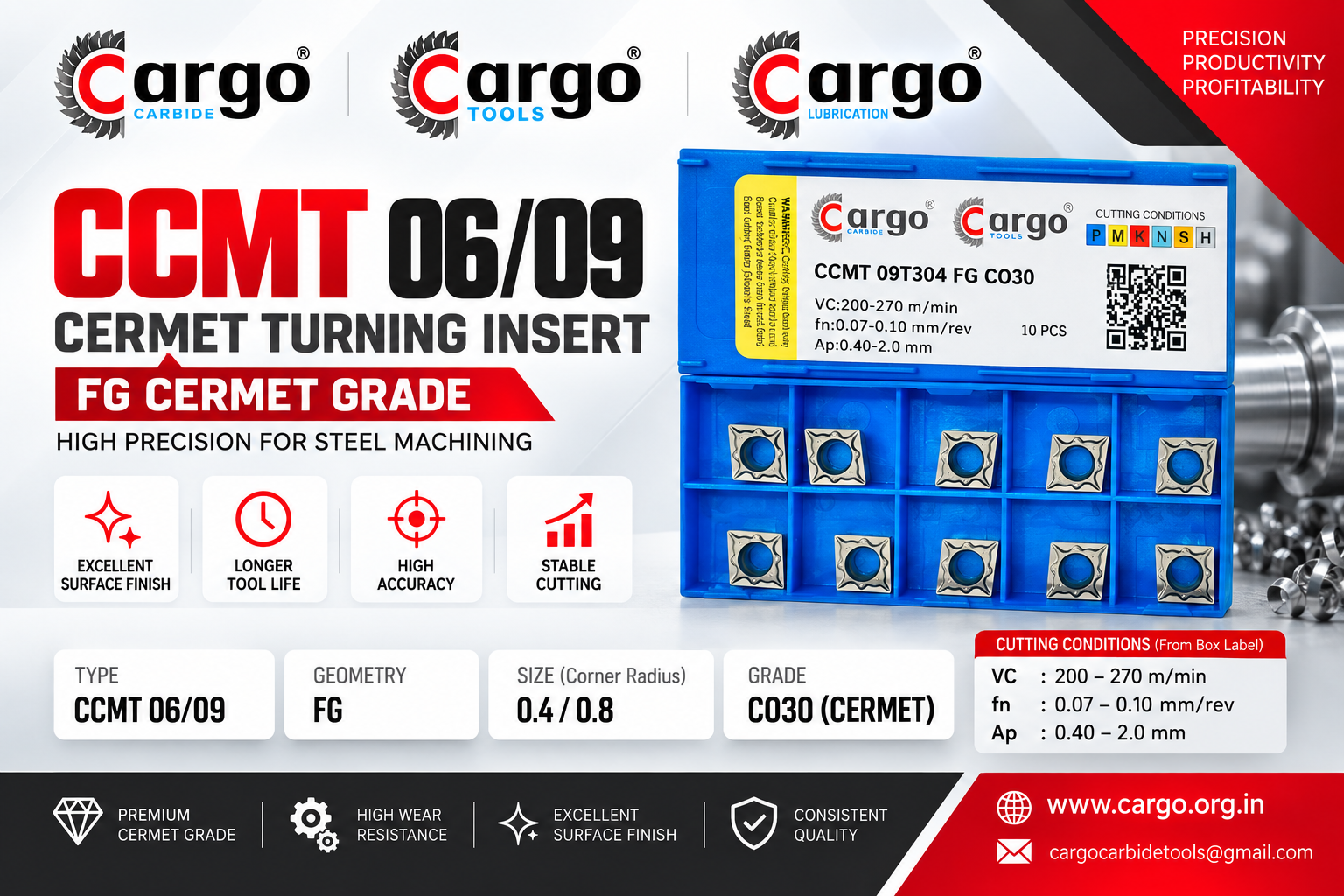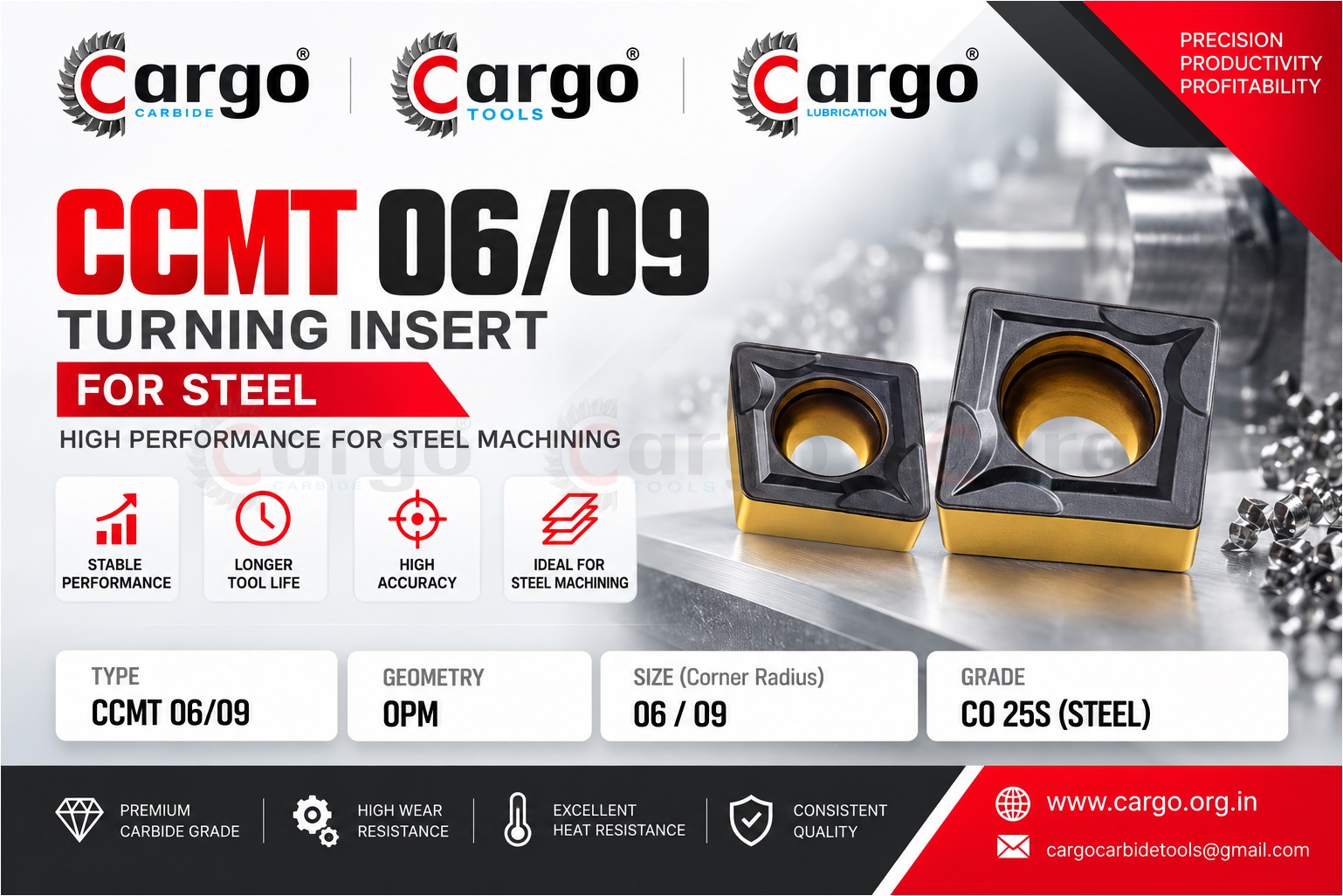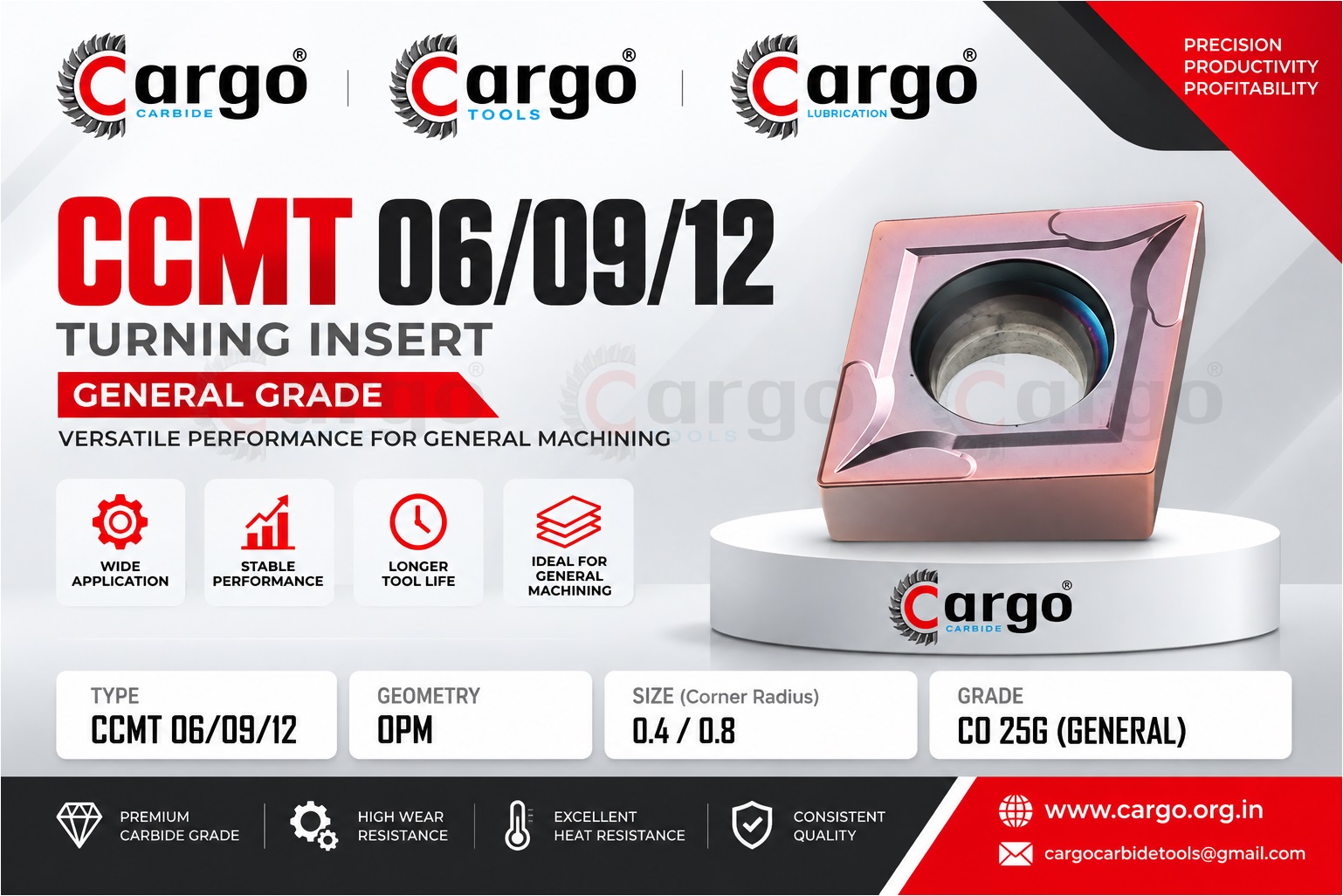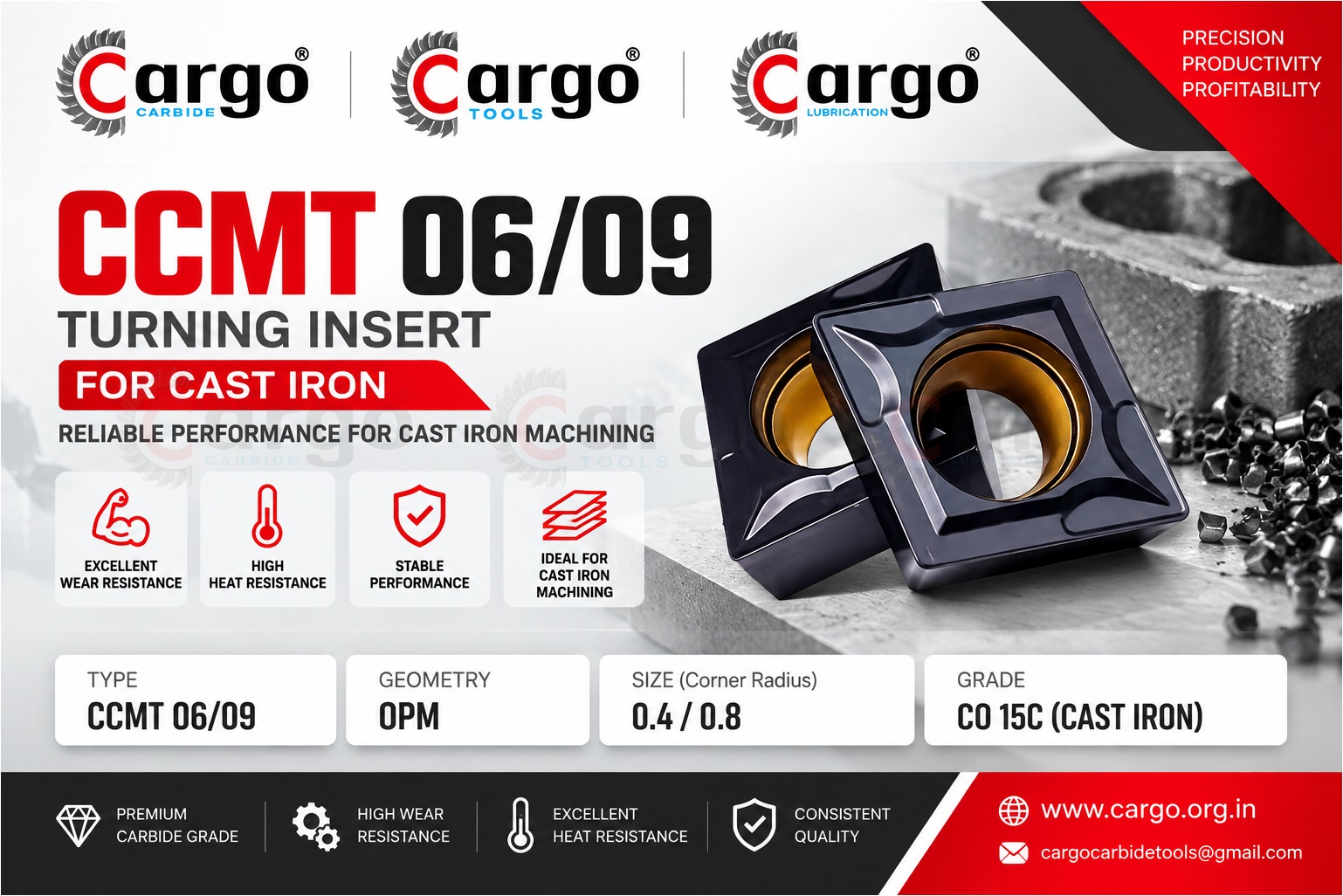

Cargo Carbide CCMT Cast Iron Grade Insert is a compact indexable carbide turning insert designed for CNC machining of cast iron components. Its CCMT geometry provides a positive-style cutting configuration that is well suited to light turning, finishing, profiling, and applications where a freer cutting action is desirable.
The CCMT shape is particularly useful for smaller components and machining operations requiring good tool accessibility. When matched with an appropriate cast-iron grade, the insert can be used for external turning, facing, profiling, and finishing of suitable cast components.
Its indexable construction allows the cutting edge to be replaced without changing the complete tool holder. This makes the CCMT format convenient for CNC production environments where repeatability and quick tooling changes are important.
For optimum machining results, the insert grade and cutting parameters should be selected according to the cast iron type, component geometry, depth of cut, feed rate, cutting speed, and machine rigidity.
| Specification | Details |
|---|---|
| Brand | Cargo Carbide |
| Product Type | Carbide Turning Insert |
| Insert Code | CCMT |
| Application | Cast Iron |
| Insert Style | Positive / Indexable |
| Cutting Configuration | Rhombic |
| Machine | CNC Lathe / Turning Center |
| Operations | Turning, Facing, Profiling & Finishing |
| Compatible Holder | CCMT Tool Holder |
| Workpiece Material | Cast Iron |
A CCMT cast iron insert is an indexable carbide turning insert designed for suitable CNC machining applications involving cast iron components.
CCMT geometry is commonly used for light turning, finishing, profiling, and machining operations where a compact positive-style cutting configuration is useful.
Yes. A suitable CCMT grade can be used for cast iron finishing when the insert specification and cutting parameters match the workpiece and machining conditions.
The insert should be fitted into a compatible CCMT turning tool holder corresponding to the particular insert size and configuration.
Consider the cast iron grade, insert size, nose radius, cutting depth, feed rate, cutting speed, required surface finish, machine rigidity, and machining operation before selecting the insert.