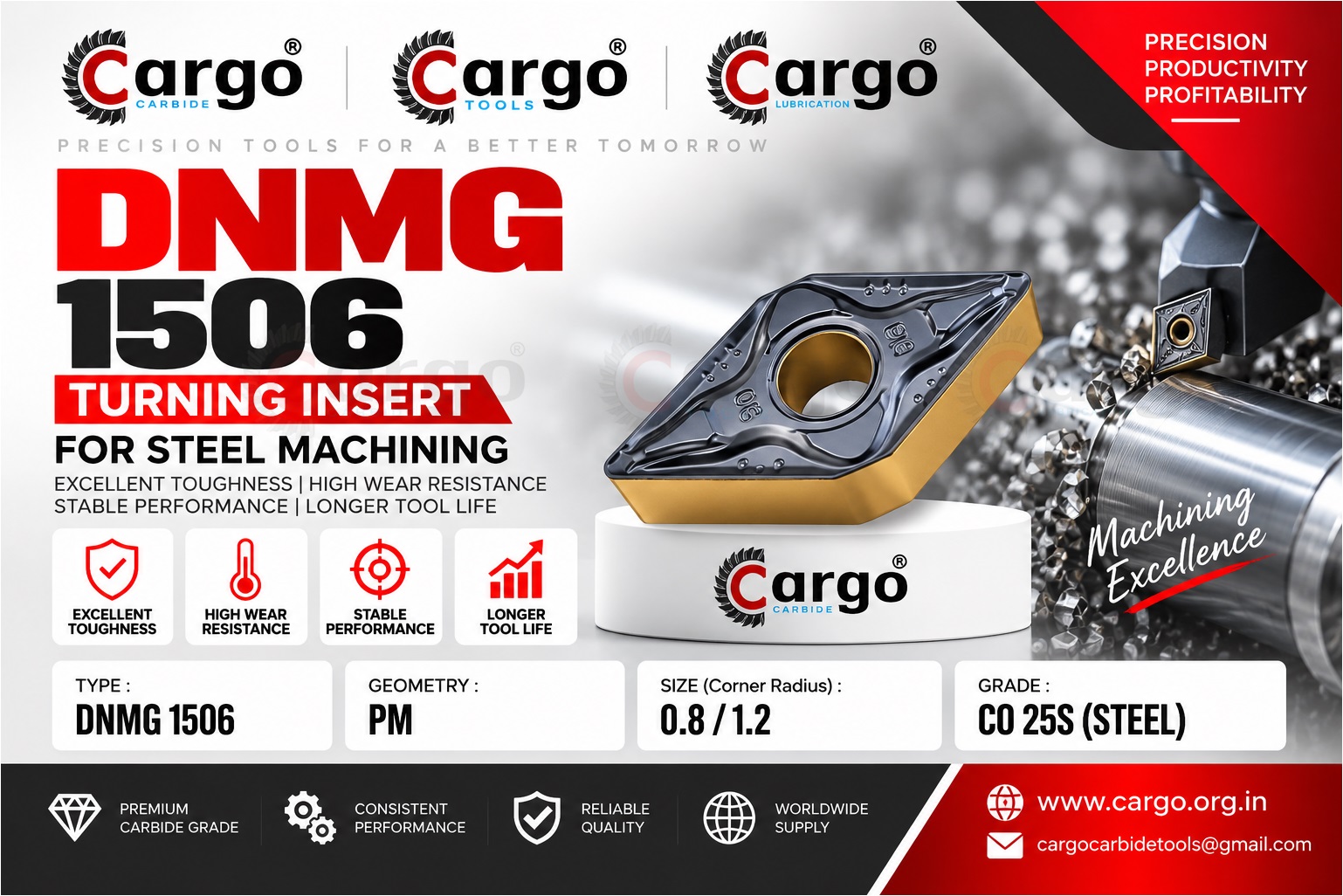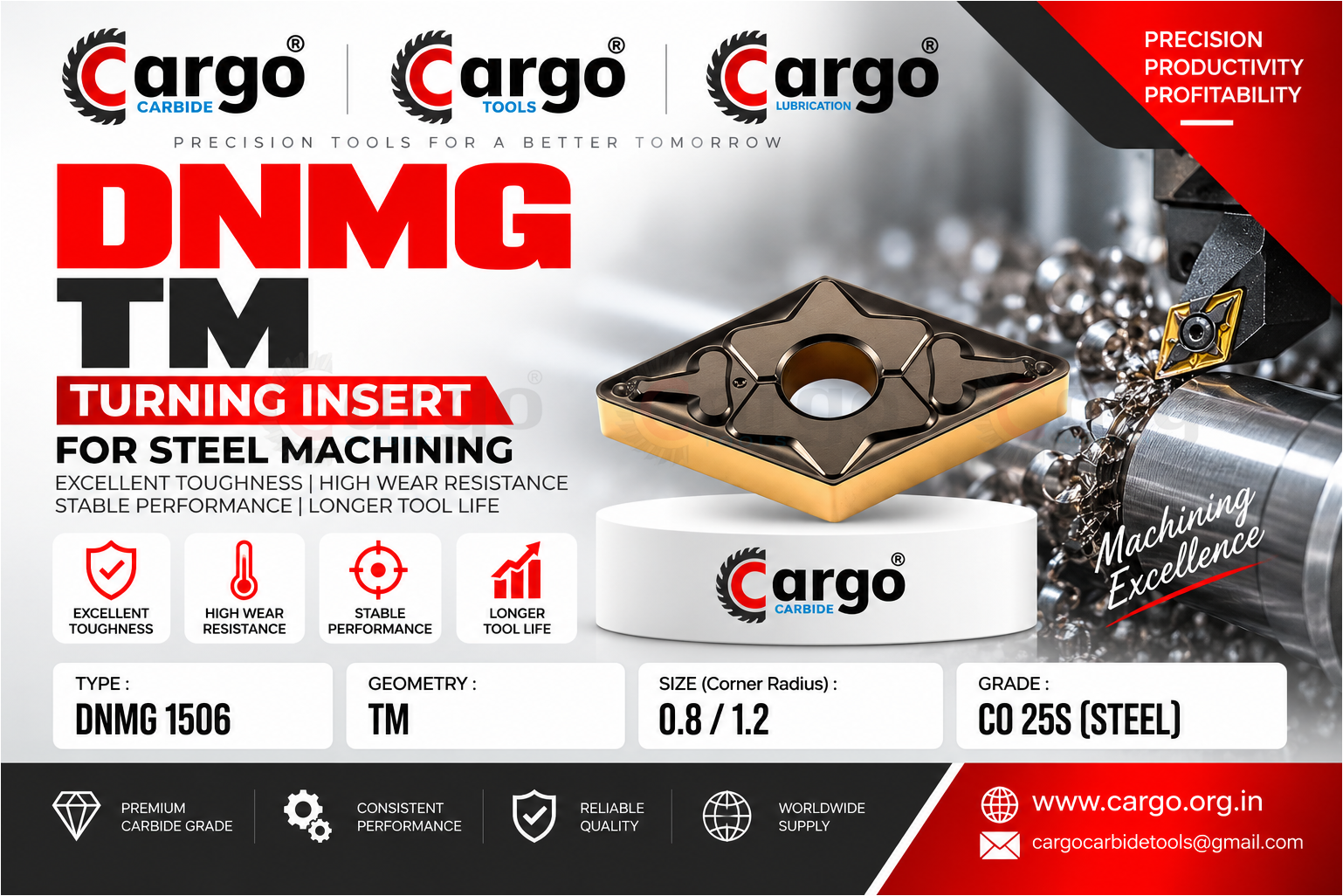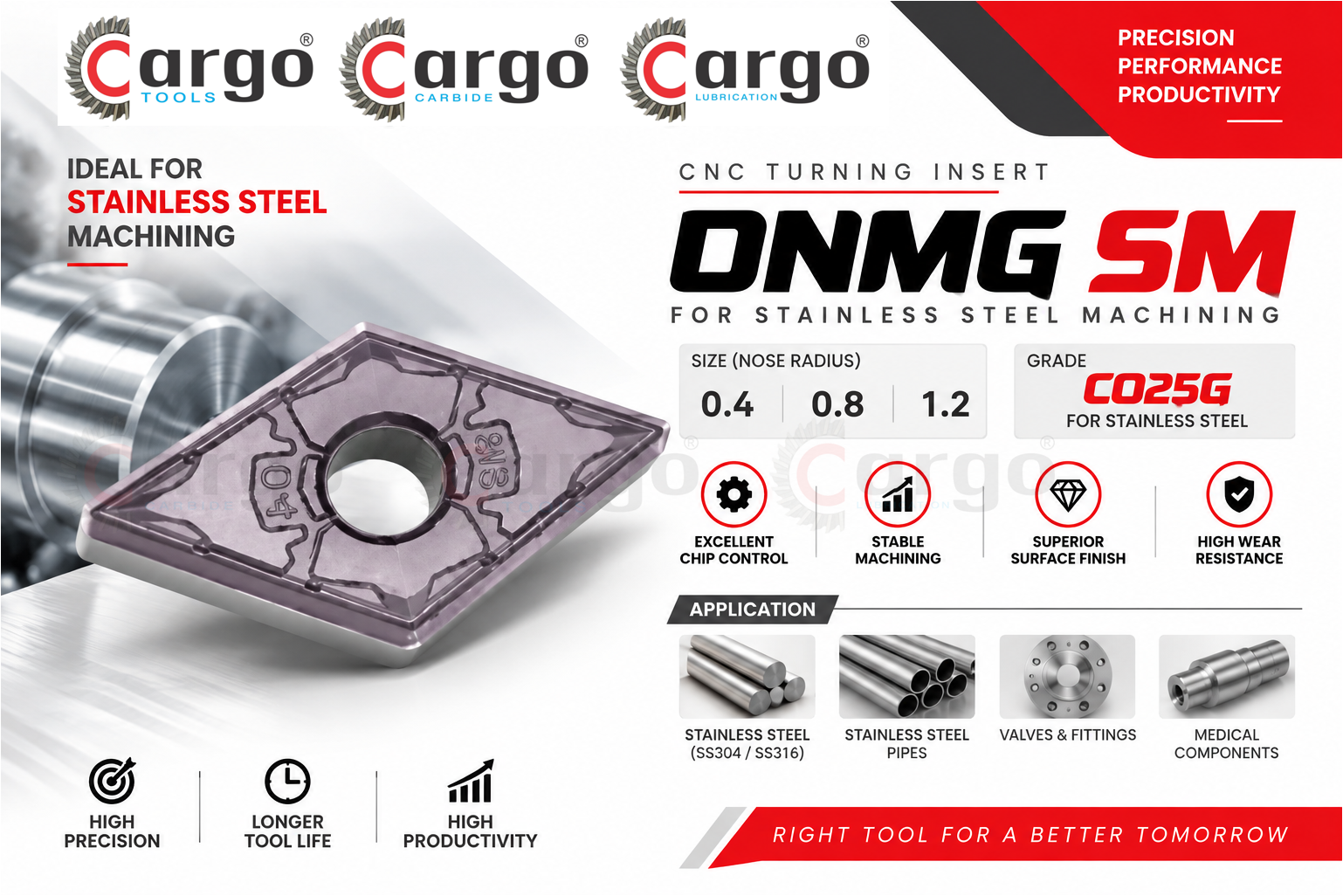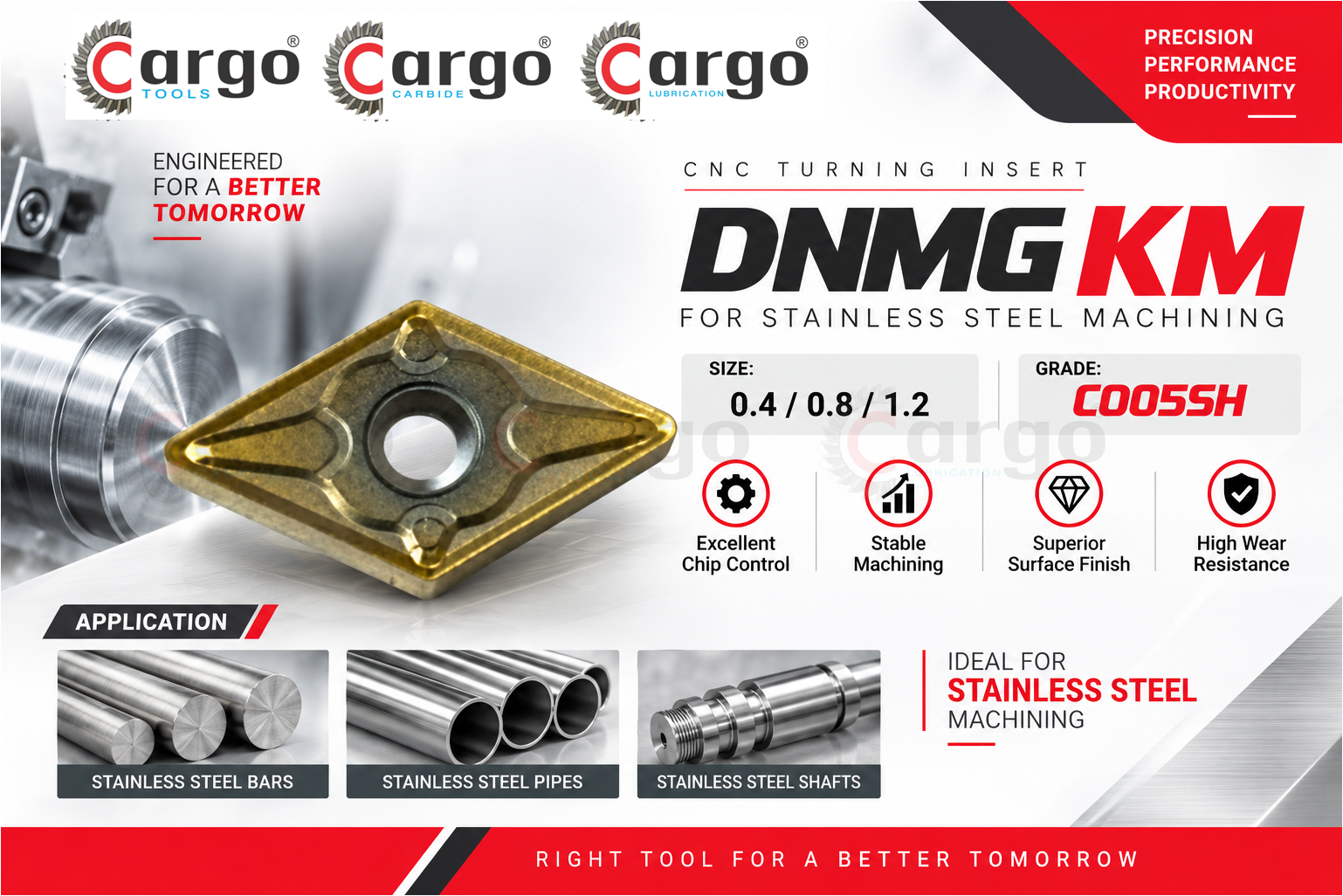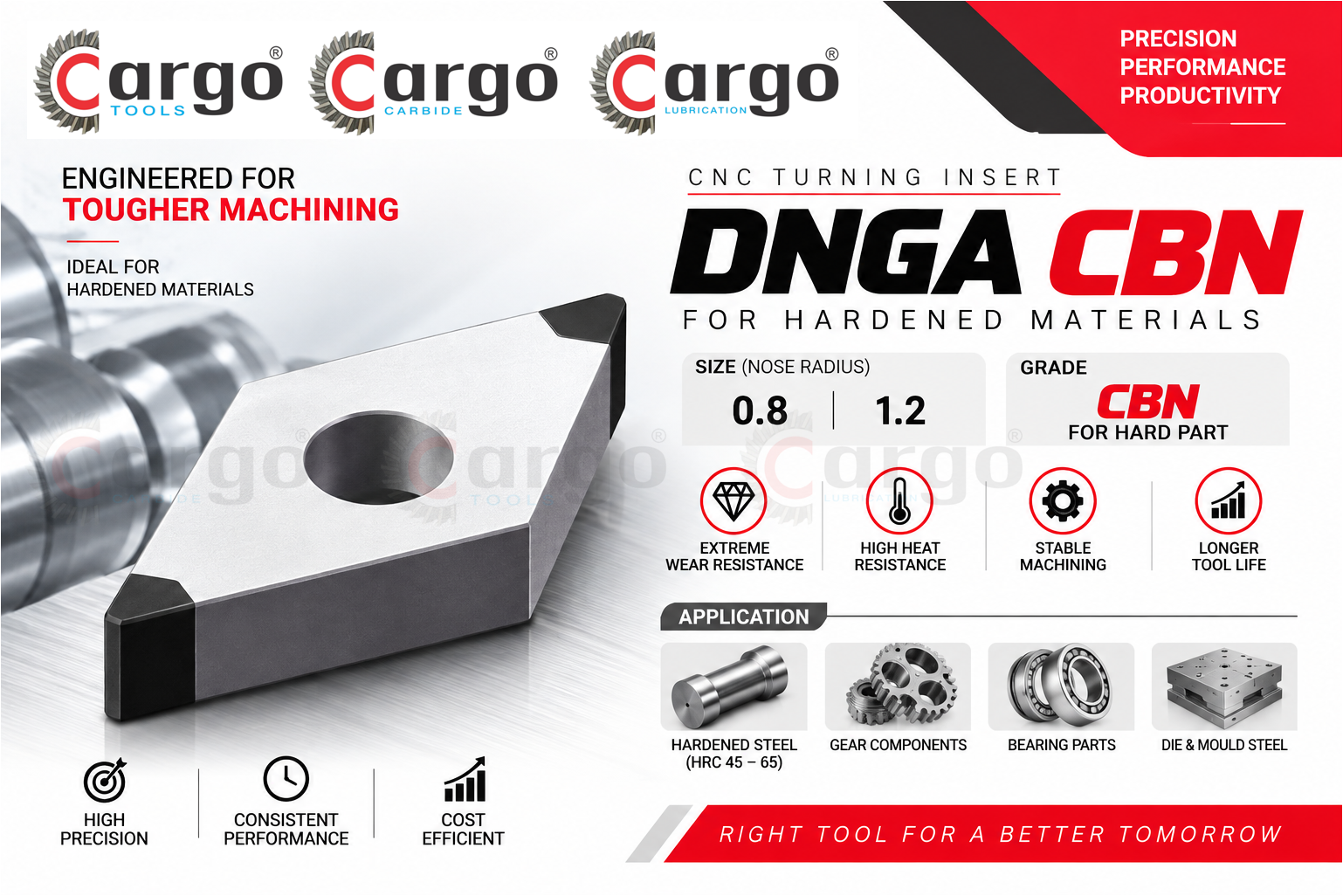
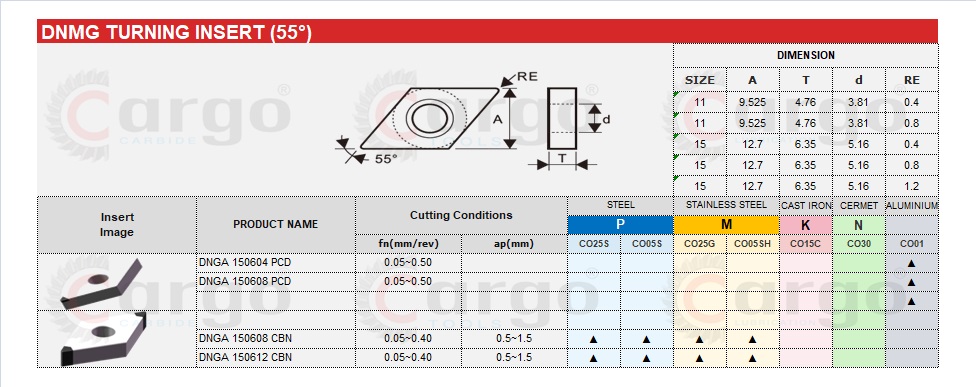
Cargo Carbide DNGA CBN Insert is a CBN cutting insert designed for precision CNC turning applications where high hardness, dimensional consistency, and controlled cutting performance are required. The DNGA geometry provides a compact diamond-shaped cutting configuration suitable for precision turning and finishing operations.
CBN, or Cubic Boron Nitride, is a cutting-tool material commonly used for machining hardened ferrous materials and other difficult-to-machine applications. DNGA CBN inserts can be used for operations such as external turning, internal turning, finishing, profiling, and precision machining, depending on the specific CBN grade and machining conditions.
The indexable design allows the cutting edge to be replaced when required while retaining the existing tool holder. Cargo Carbide DNGA CBN inserts are suitable for compatible DNGA tool holders on CNC lathes and turning centers.
| Specification | Details |
|---|---|
| Brand | Cargo Carbide |
| Product Type | CBN Turning Insert |
| Insert Code | DNGA |
| Cutting Material | CBN |
| Insert Style | Indexable |
| Application | Precision CNC Turning |
| Machine | CNC Lathe / Turning Center |
| Operations | Turning, Finishing & Profiling |
| Cutting Material | Cubic Boron Nitride |
| Compatible Holder | DNGA Tool Holder |
What is a DNGA CBN insert?
A DNGA CBN insert is an indexable turning insert that uses cubic boron nitride as the cutting material and is designed for demanding CNC turning applications.
2. What materials can DNGA CBN inserts machine?
CBN inserts are commonly used for hardened ferrous materials and other difficult-to-machine applications. The appropriate CBN grade should be selected according to the workpiece material and machining conditions.
3. Can DNGA CBN inserts be used for hardened steel?
Yes. CBN tooling is widely used for precision turning of hardened steel when the insert grade, cutting parameters, and machine setup are suitable.
4. What operations are suitable for DNGA CBN inserts?
DNGA CBN inserts can be used for precision turning, finishing, profiling, external turning, and certain internal machining applications depending on the tool configuration.
5. What should I consider when selecting a DNGA CBN insert?
Consider the workpiece hardness and material, machining operation, depth of cut, feed rate, cutting speed, machine rigidity, nose radius, and required surface finish before selecting the appropriate CBN configuration.