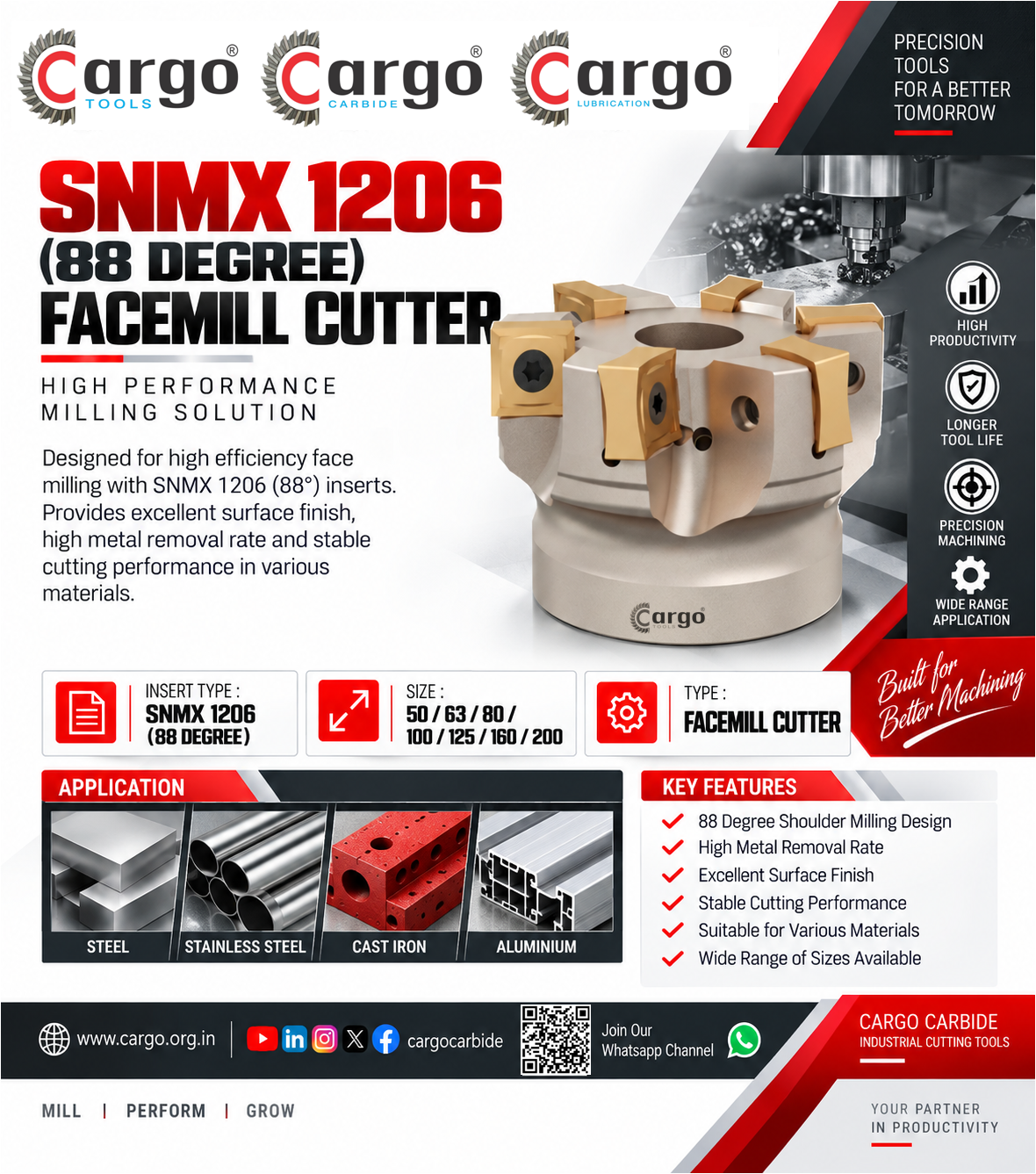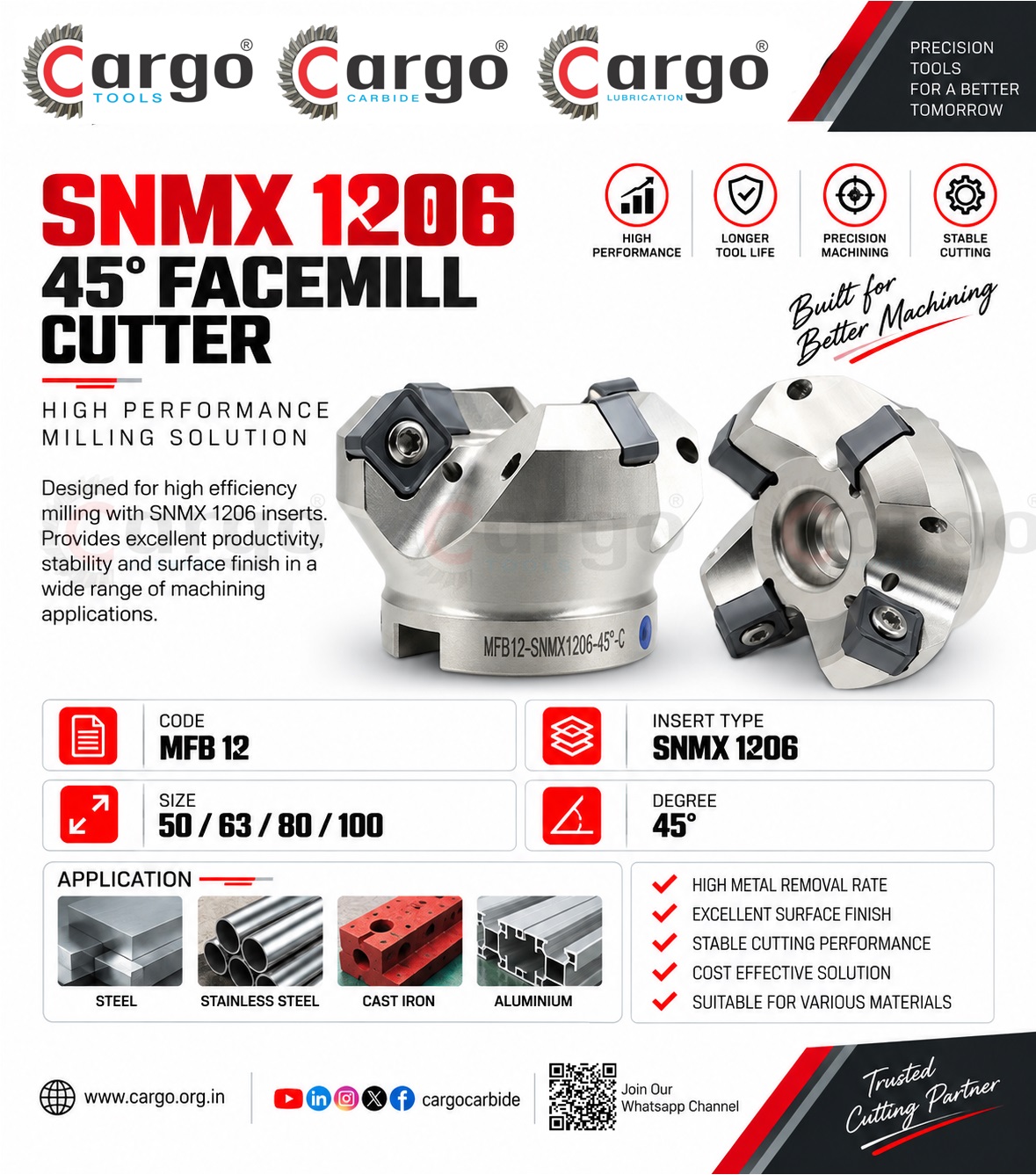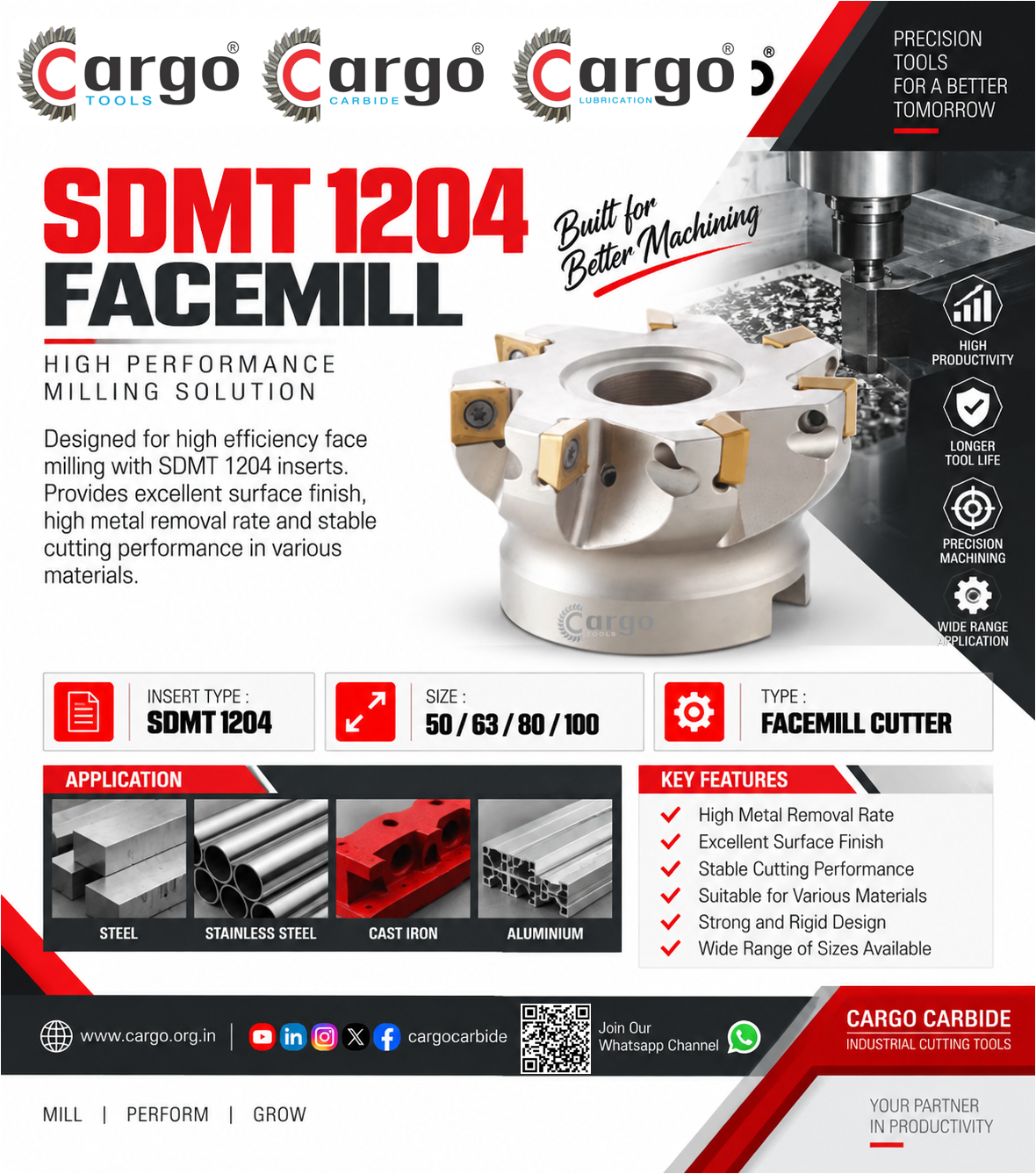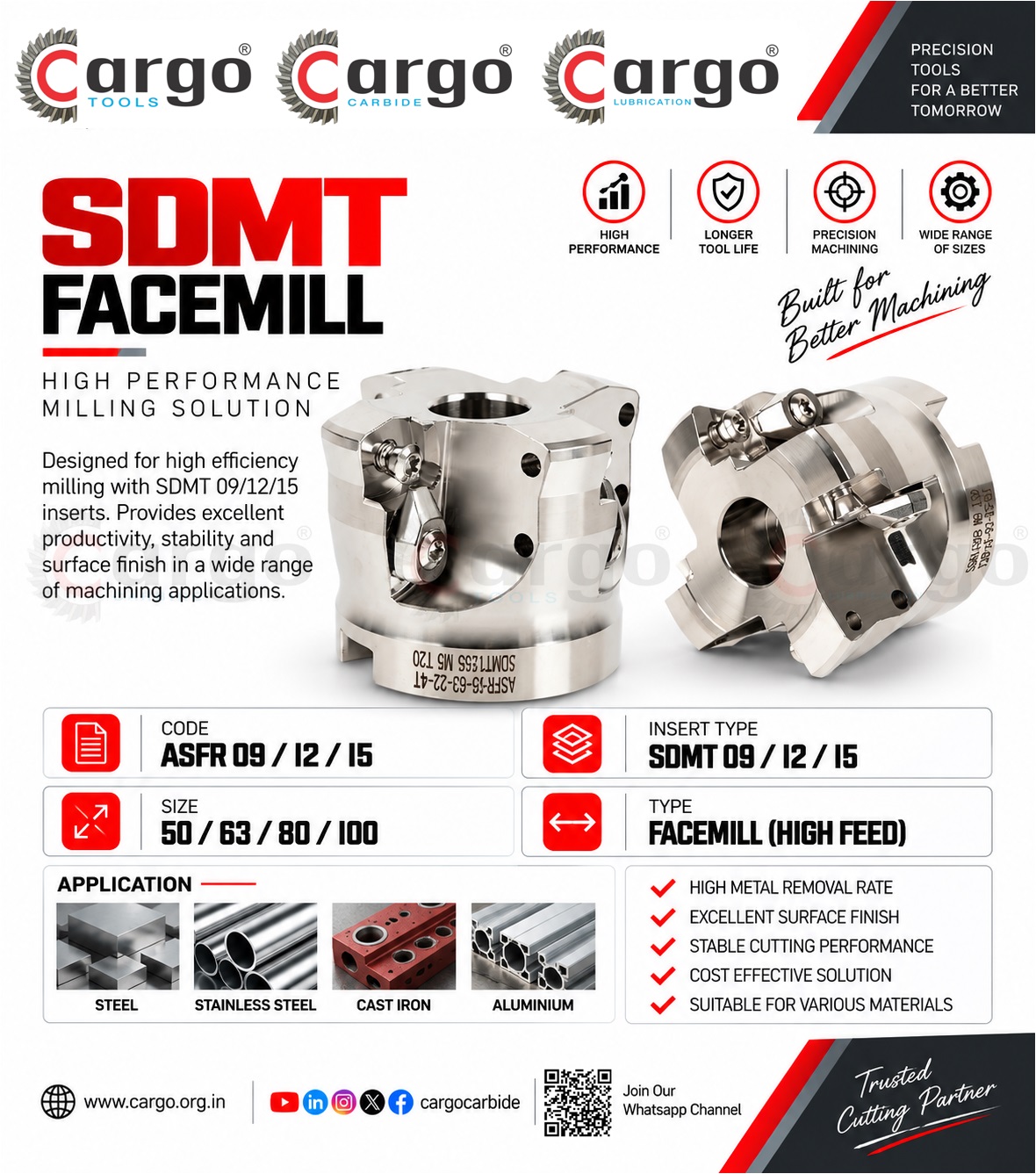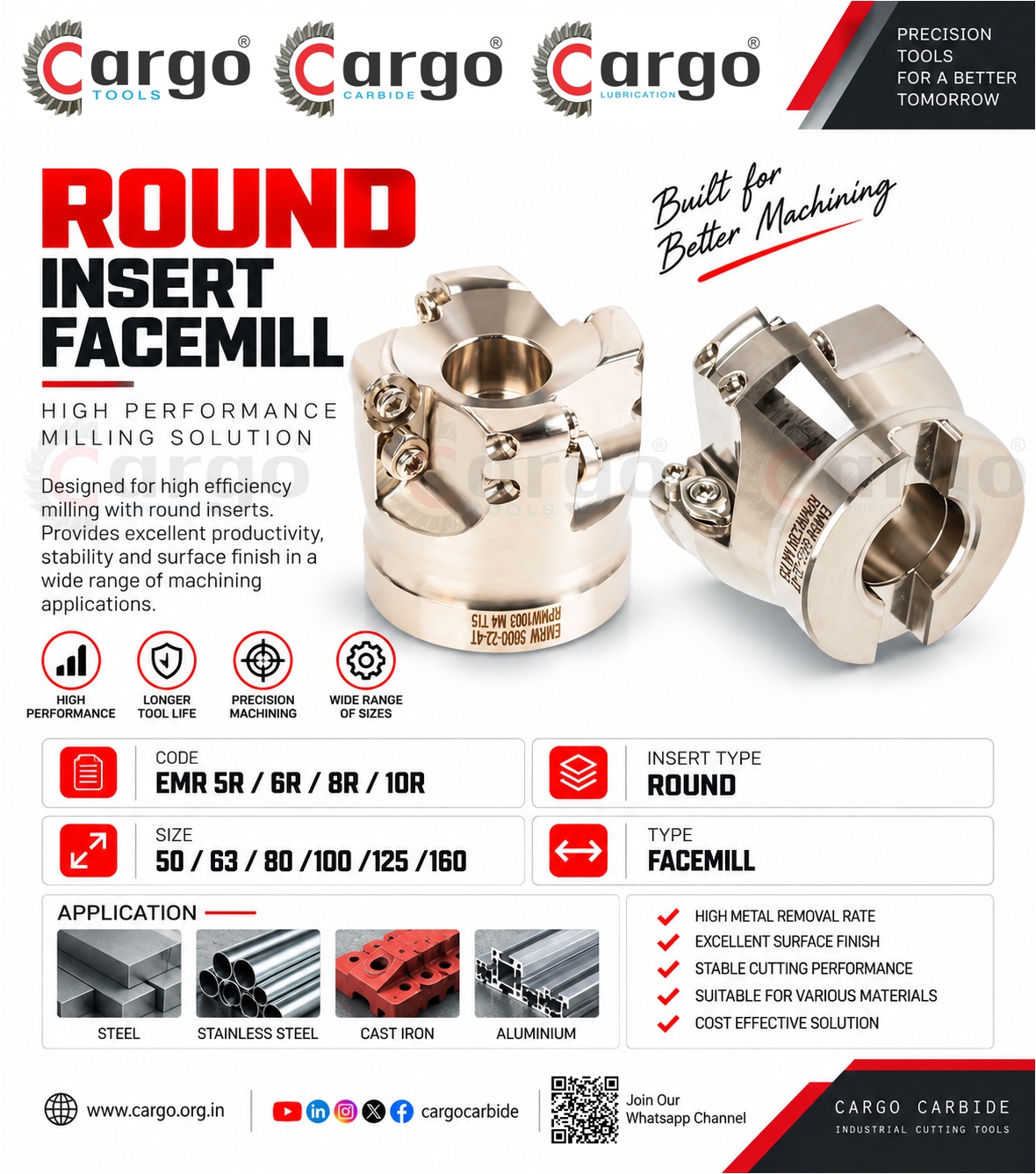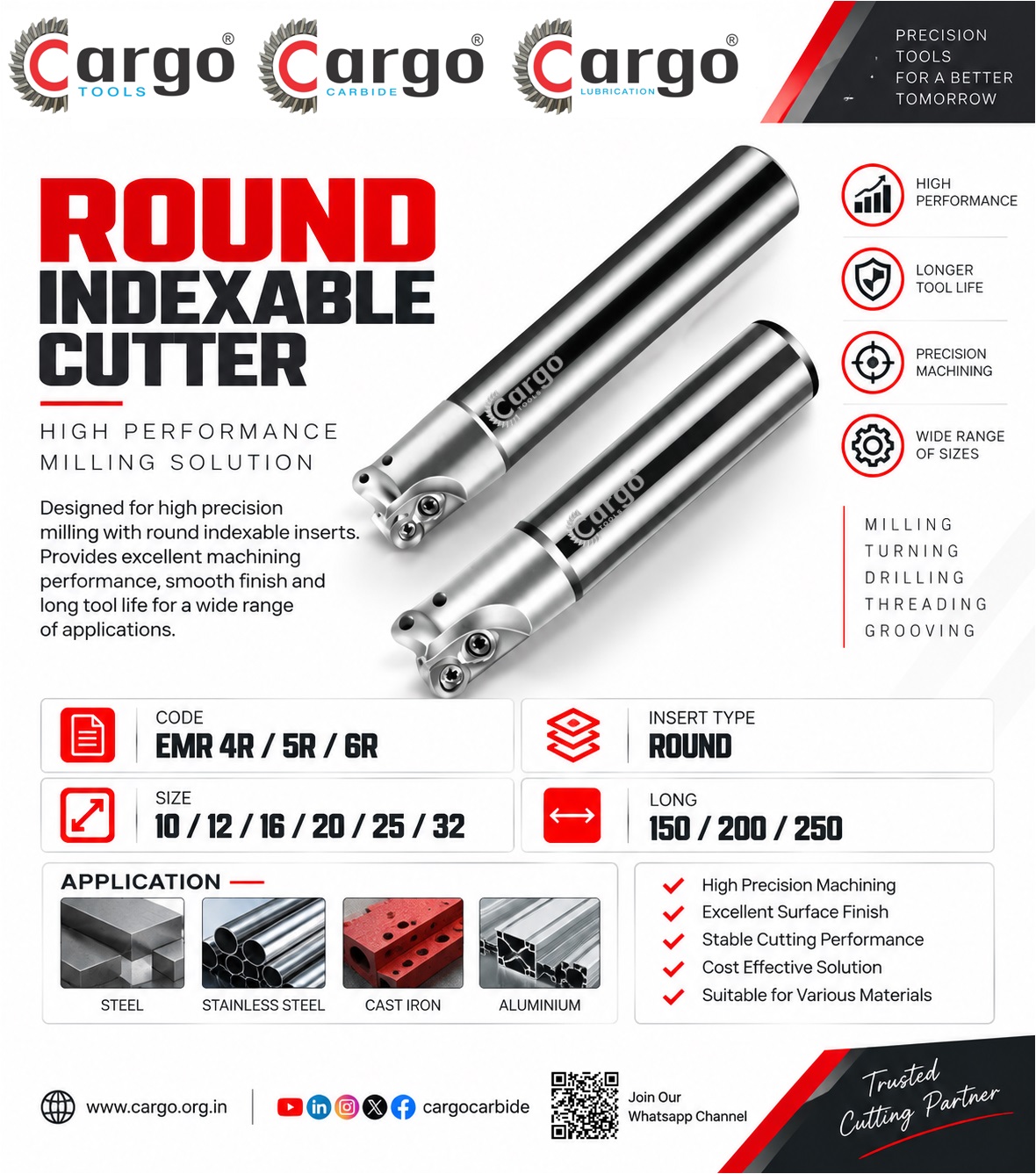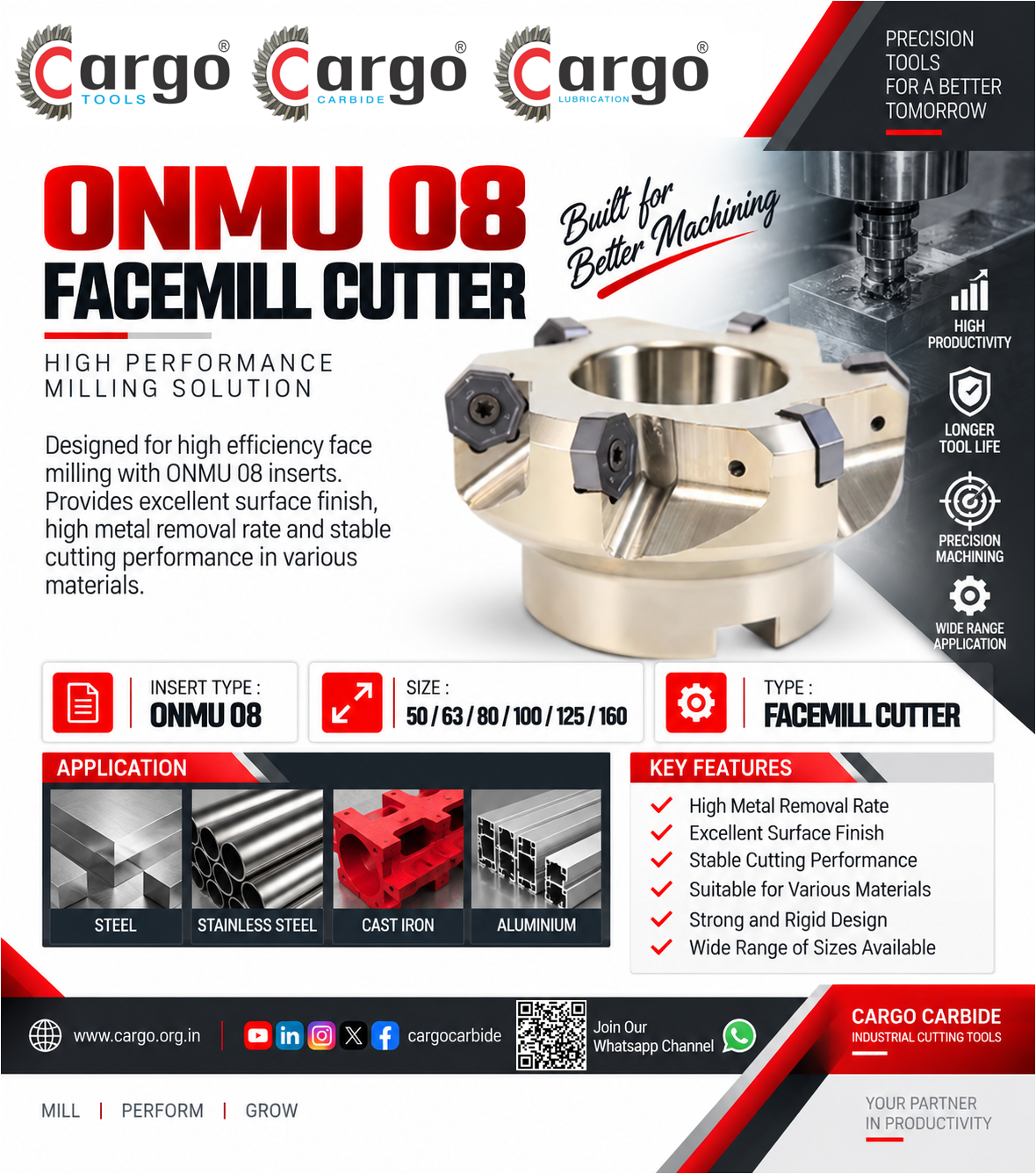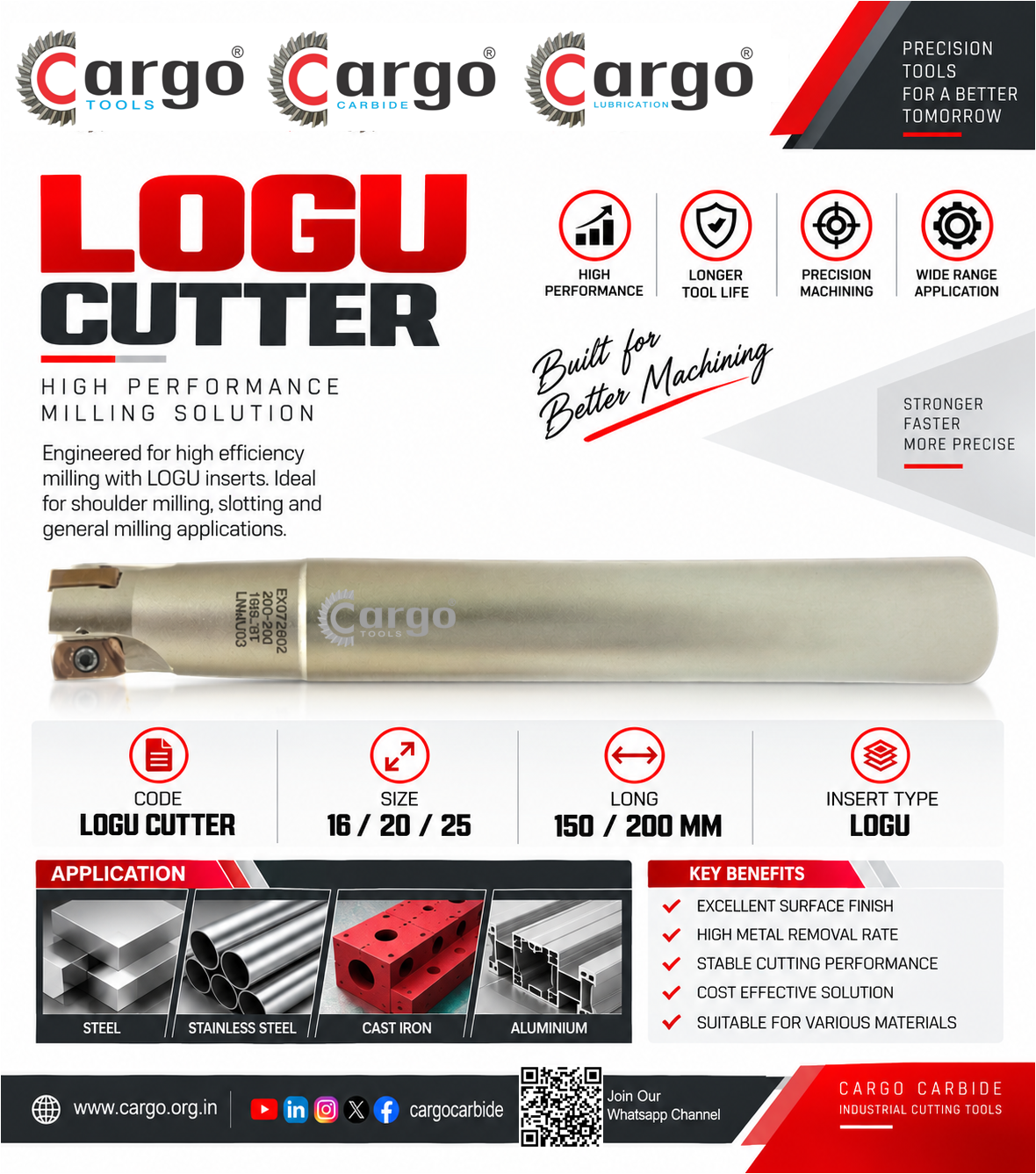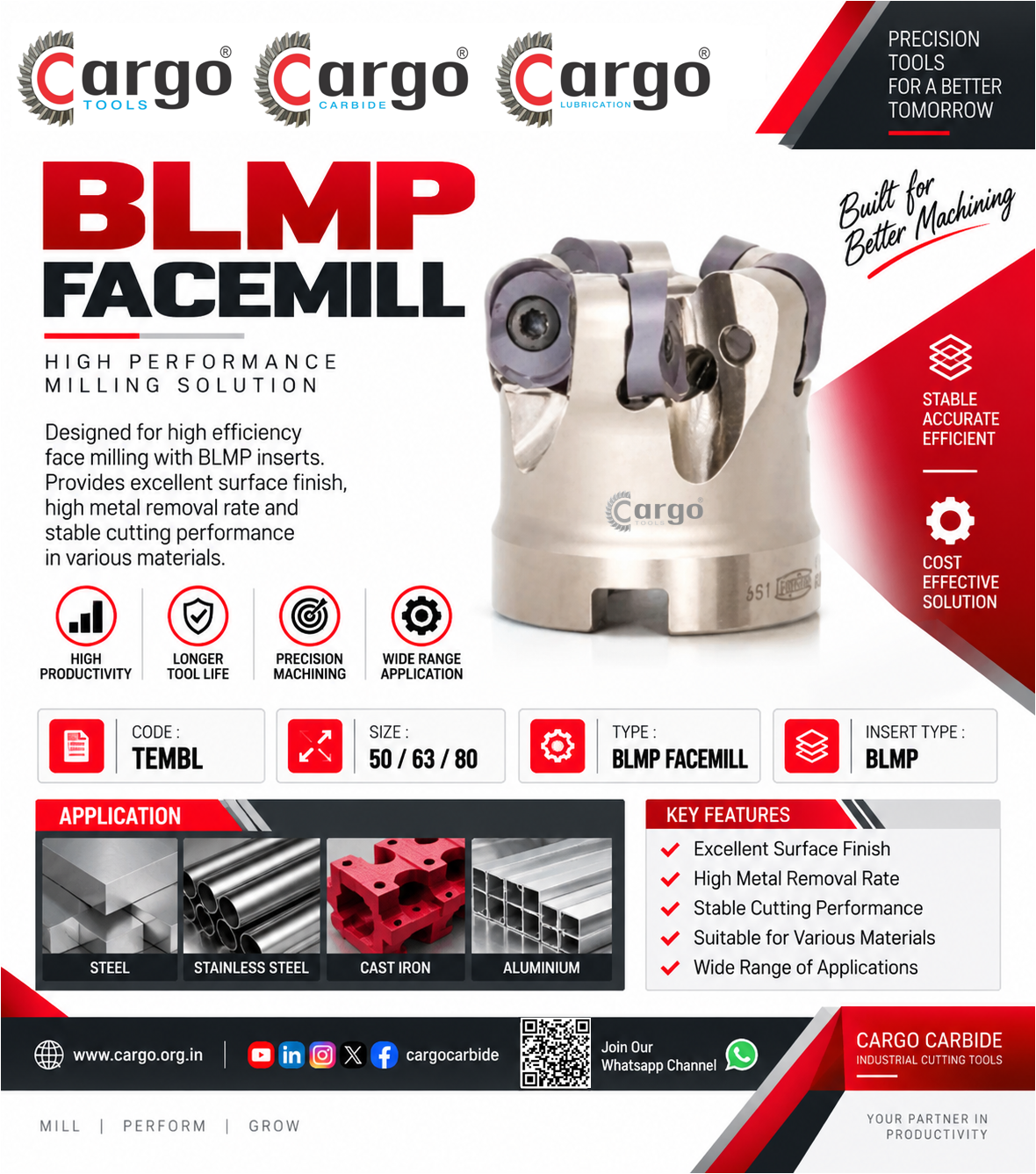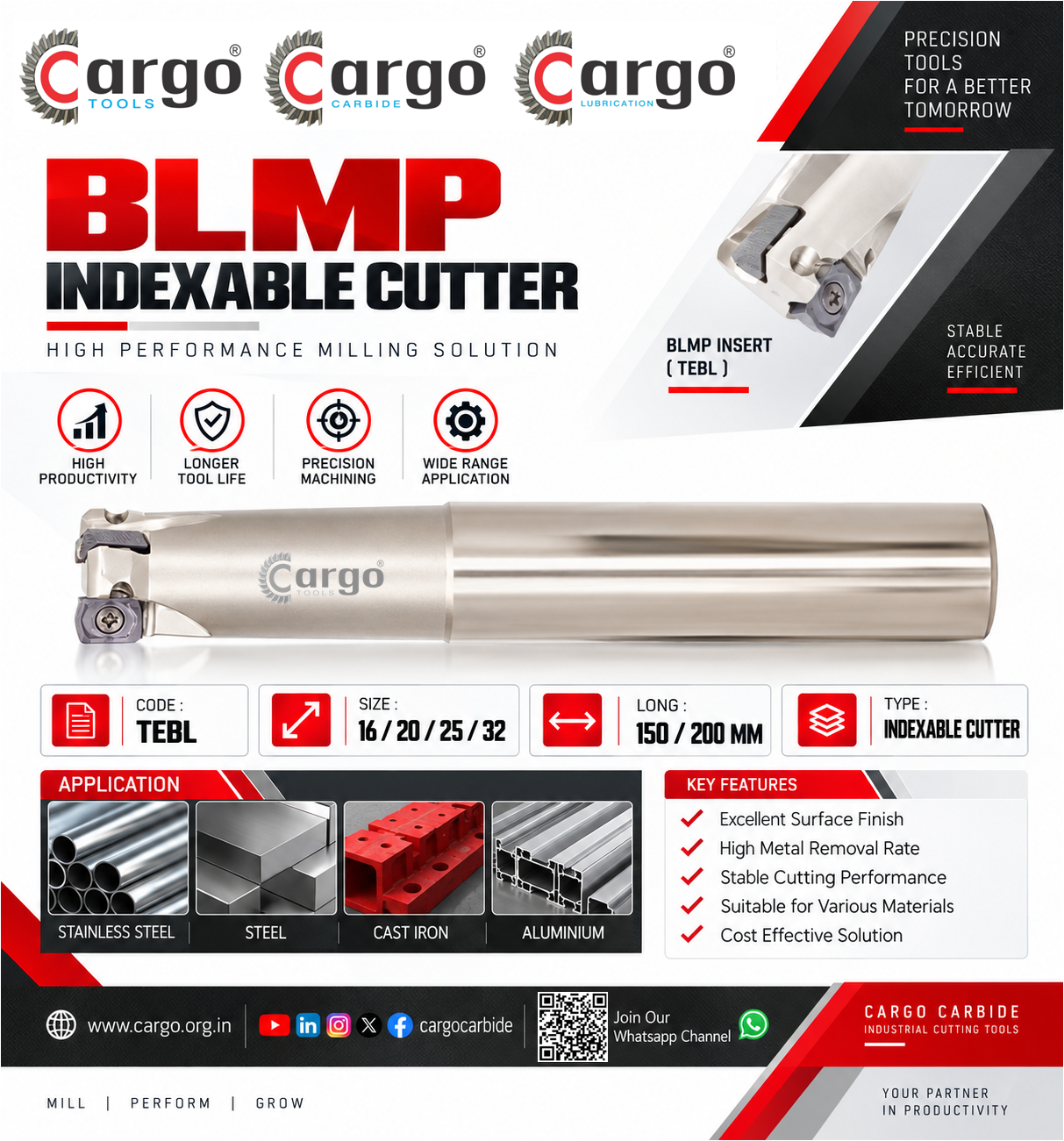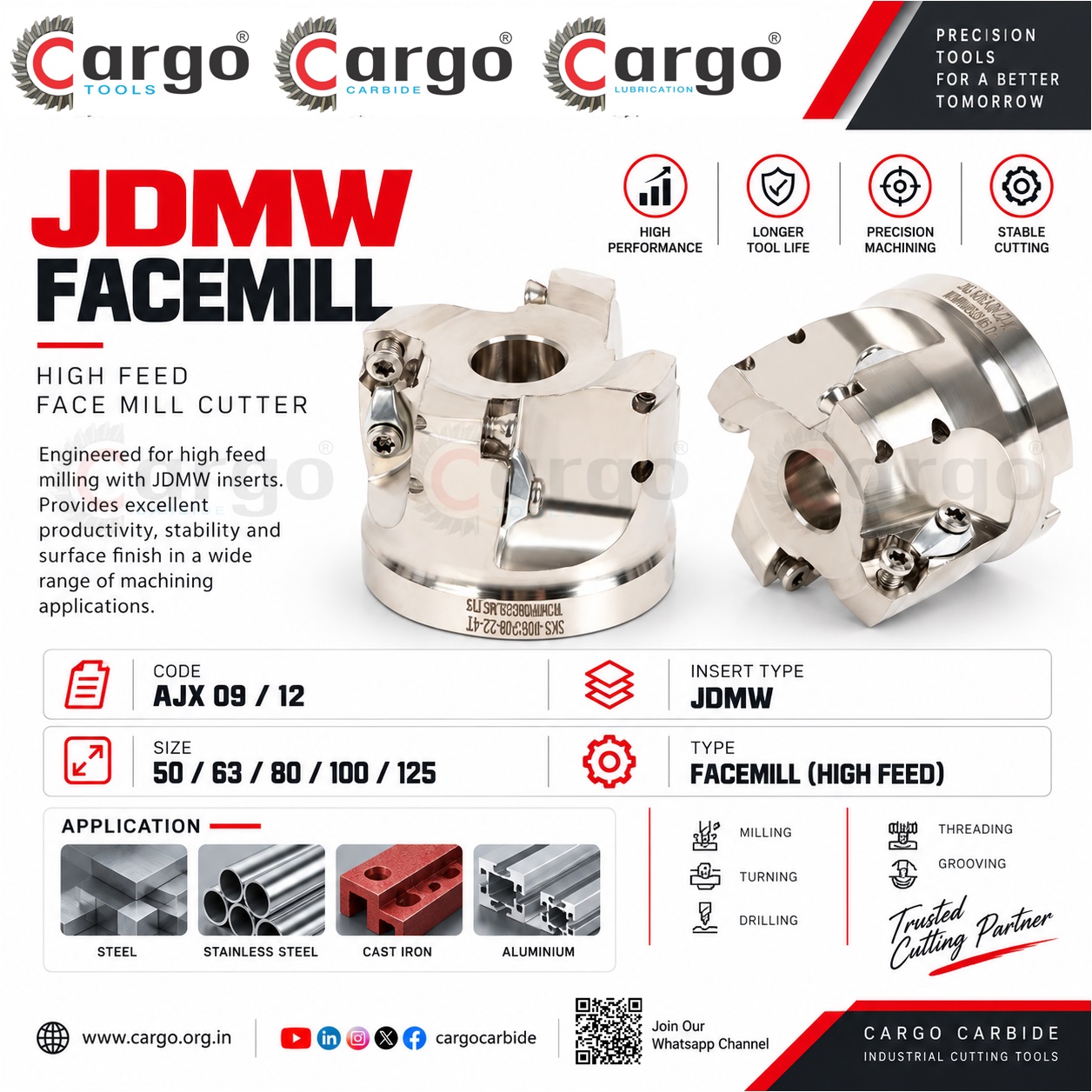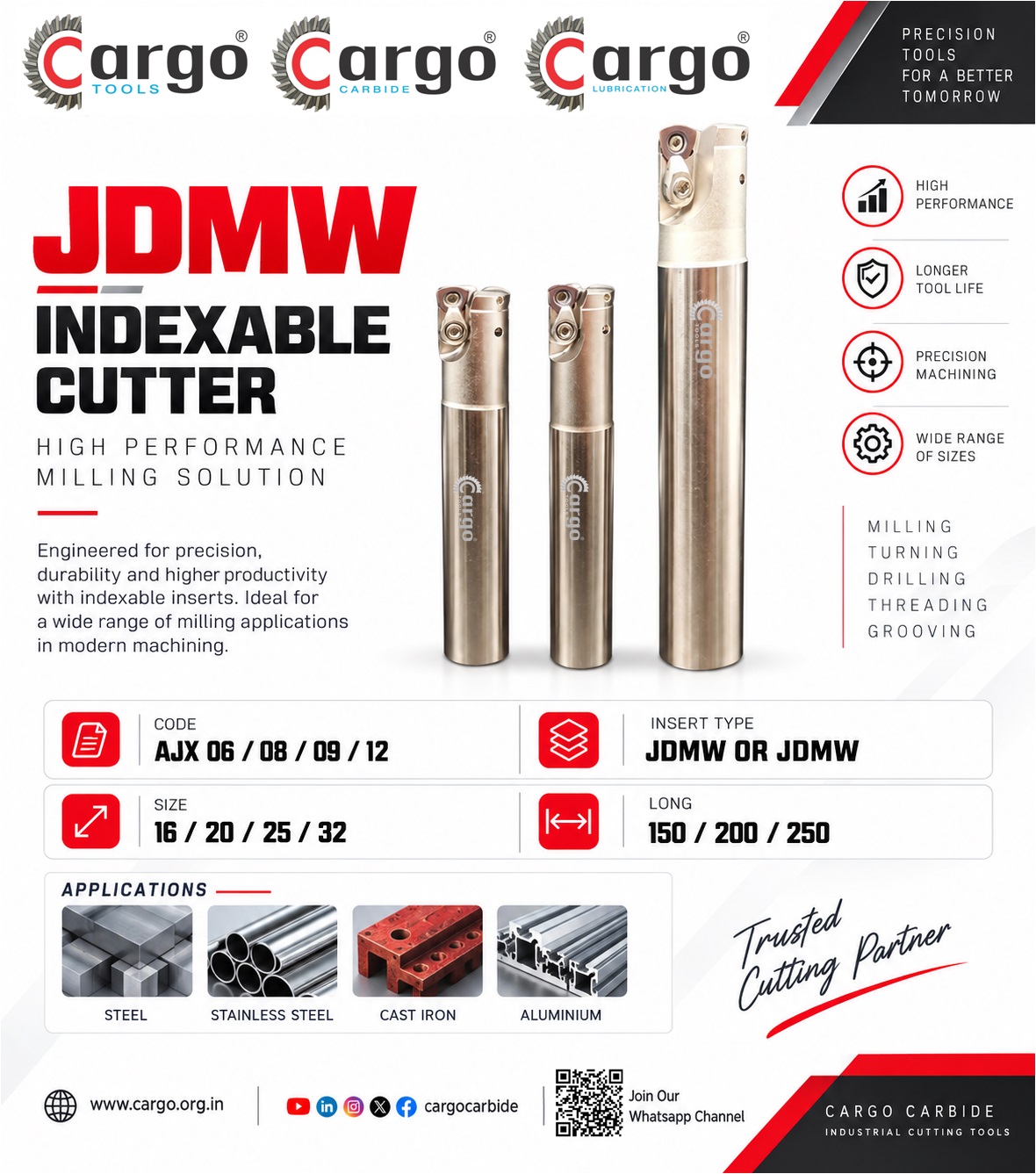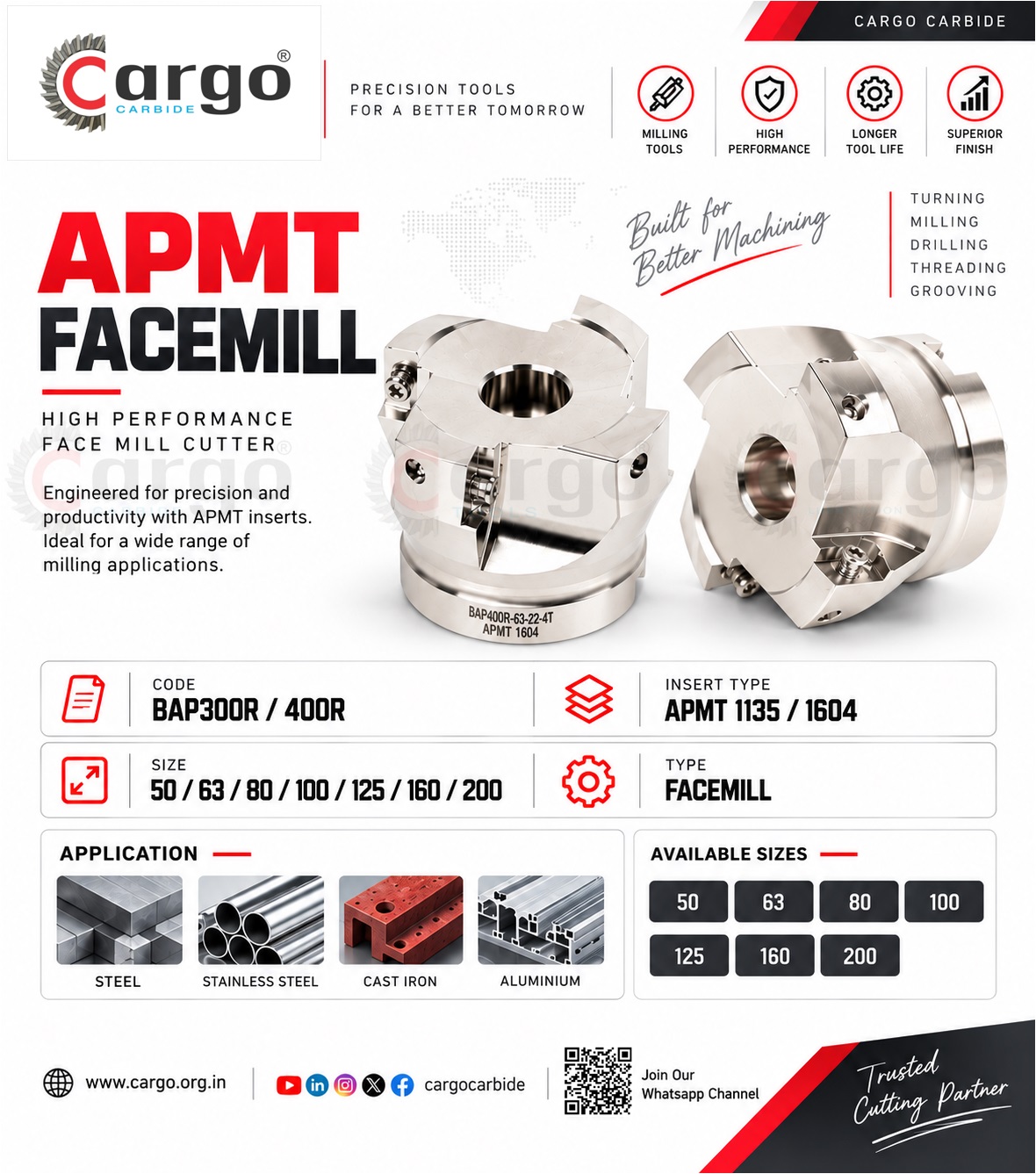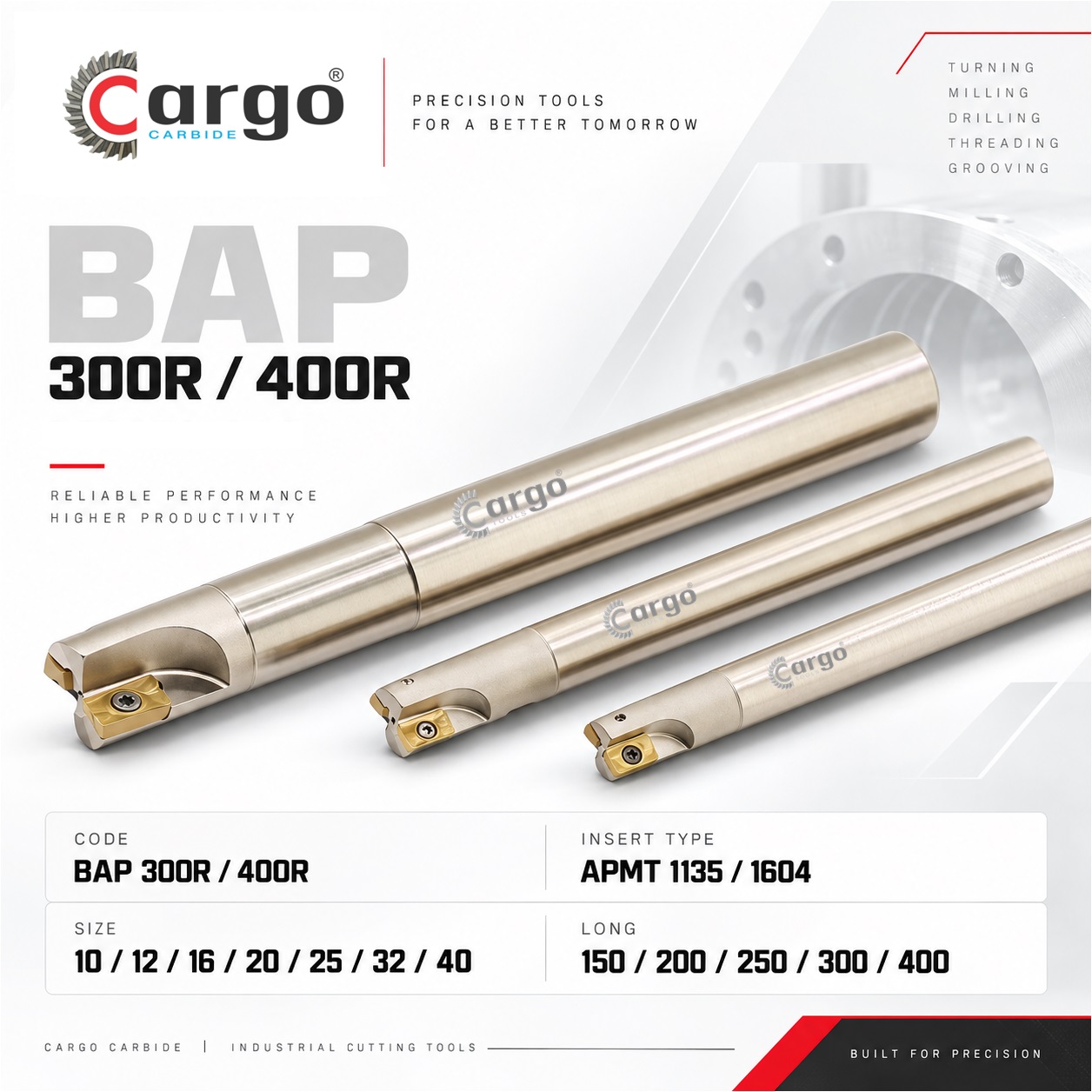

Cargo Carbide APMT Shoulder Milling Cutter is an indexable CNC milling cutter designed for machining shoulders, steps, side walls and other features where controlled edge positioning is required. The cutter uses replaceable APMT milling inserts, allowing the cutting edges to be indexed or replaced without changing the complete cutter body.
The APMT insert platform is widely associated with positive-style square shoulder and general milling systems. APMT cutter systems are used for shoulder milling, side milling, pocketing and selected face milling operations, with different cutter bodies matched to APMT insert sizes such as APMT1135 and APMT1604.
A major application of this cutter family is 90° shoulder milling, where the cutting geometry is used to produce a defined shoulder between two machined surfaces. Suitable APMT configurations can also be used for step milling, slot-related work, pocket machining and general material removal depending on the cutter design and insert selection.
The replaceable-insert construction gives the user flexibility to select different APMT grades, corner radii and chipbreaker geometries according to the workpiece material and machining operation. Commercial APMT ranges include different configurations for light, medium and heavier milling conditions.
For production machining, the APMT Shoulder Milling Cutter can be paired with suitable APMT inserts for steel, stainless steel, cast iron and other applicable materials. The exact insert grade and cutting parameters should always be selected according to the material, cutter diameter, machine capability and machining conditions.
| Specification | Details |
|---|---|
| Brand | Cargo Carbide |
| Product Name | APMT Shoulder Milling Cutter |
| Product Type | Indexable Shoulder Milling Cutter |
| Cutter Style | Square / Shoulder Milling Cutter |
| Insert Type | APMT |
| Common Insert Platforms | APMT1135, APMT1604 |
| Cutting Application | Shoulder, Step, Side and General Milling |
| Approach Angle | Model dependent; 90° shoulder applications available |
| Cutter Diameter | Model dependent |
| Number of Inserts | Cutter-body dependent |
| Cutter Body | Indexable milling cutter body |
| Mounting | Model dependent |
| Tool Material | Alloy / Tooling Steel Cutter Body |
| Insert Clamping | Screw-Clamped |
| Machine Type | CNC Milling Machine / VMC / Machining Center |
| Workpiece Materials | Steel, Stainless Steel, Cast Iron and other suitable materials |
| Selection Factors | Cutter diameter, insert size, grade, radius, chipbreaker and machine interface |
Important: The exact Cargo cutter diameter, number of pockets, shank/bore size and compatible APMT insert should be entered from your actual product specification rather than using generic industry dimensions.
| Cutter / Insert Platform | Typical Application |
|---|---|
| APMT1135 | Smaller shoulder and general milling cutters |
| APMT1604 | Larger shoulder and general-purpose milling cutters |
| APMT1135 + suitable grade | Shoulder, side and lighter milling |
| APMT1604 + suitable grade | Shoulder, face and higher-capacity milling |
Industry product ranges commonly pair APMT1135 with smaller cutter bodies and APMT1604 with larger cutter systems.
The cutter is intended for machining defined shoulders and steps where accurate side-wall formation is required.
Worn cutting edges can be indexed or replaced without replacing the complete cutter body.
APMT1135 and APMT1604 platforms allow the cutter system to be configured around different cutter-body sizes and applications.
Depending on the cutter design, the same APMT system can be used for shoulder, side, pocket and selected face milling applications.
Different carbide grades and coatings can be selected for different workpiece materials and cutting conditions.
Instead of replacing an entire solid cutter when an edge becomes worn, the operator can replace the relevant indexable insert.
The replaceable-insert format makes the cutter suitable for repeated milling operations in CNC machining environments.
An APMT Shoulder Milling Cutter is useful when a machining operation requires a combination of shoulder formation, material removal and replaceable cutting edges.
A solid carbide end mill is manufactured as one complete cutting tool, whereas an APMT indexable cutter separates the reusable cutter body from the replaceable carbide inserts.
This arrangement allows the cutter body to remain in the machine while the cutting insert can be indexed or replaced as needed.
The APMT platform is particularly relevant to square-shoulder milling because its positive insert geometry can be used in cutter systems designed to produce 90° shoulders.
| Feature | APMT Shoulder Milling Cutter | Solid Carbide End Mill |
|---|---|---|
| Cutting element | Replaceable APMT insert | Integral carbide |
| Cutter body | Reusable | Part of complete tool |
| Edge replacement | Insert replacement | Complete tool replacement |
| Main application | Shoulder / general milling | Milling, slotting, profiling |
| Tool flexibility | Different insert grades/geometries | Fixed tool geometry |
| Maintenance | Replace/index insert | Replace or recondition tool |
| Feature | APMT Shoulder Milling Cutter | APMT Face Mill |
|---|---|---|
| Main purpose | Shoulder and step machining | Surface / face machining |
| Side wall requirement | Strong focus | Application dependent |
| Typical geometry | Square shoulder | Face milling |
| Cutter form | End mill / shoulder cutter | Face mill |
| Typical work | Steps, shoulders, pockets | Broad flat surfaces |
Select the cutter diameter according to the required machining width, available machine power and workpiece geometry.
The insert must match the cutter body's pocket. APMT1135 and APMT1604 are common platforms, but they are not interchangeable with every APMT cutter body.
Choose the insert radius according to the required shoulder geometry and cutting conditions.
Match the carbide grade to the workpiece material and machining conditions.
Light, medium and roughing geometries are available across commercial APMT ranges. The correct choice depends on cutting load and machining objective.
Confirm whether the required cutter uses a straight shank, arbor mounting, Weldon-style connection or another machine-side mounting arrangement.
More insert pockets can increase the number of cutting edges engaged during machining, but the correct configuration depends on the cutter design, machine power and cutting parameters.
APMT1135 is commonly used with smaller APMT cutter systems. Commercial ranges associate this platform with compact shoulder and general milling cutters.
It can be considered for:
The exact cutter diameter and compatible insert should be confirmed from the complete cutter specification.
APMT1604 is a larger APMT insert platform commonly used in larger cutter bodies. Industry ranges show APMT1604 systems for square shoulder and face milling applications.
Typical applications can include:
For steel machining, select an APMT insert grade and chipbreaker intended for the particular steel and cutting conditions.
The cutter diameter, insert radius, depth of cut, feed per tooth, spindle speed and machine rigidity all influence the final cutting result.
Do not use one cutting-data recommendation for every APMT grade or steel type.
Stainless steel can require different cutting conditions from conventional steel. Use an APMT insert grade and geometry specifically suited to the stainless-steel application.
The insert grade, chipbreaker, cutting speed and feed should be selected according to the material and tooling manufacturer's recommendations.
Suitable APMT grades can be used for compatible cast-iron milling applications. The correct grade should be confirmed from the insert manufacturer's material/application chart.
For abrasive cast irons, edge security and grade selection become particularly important.
The APMT Shoulder Milling Cutter can be used on VMCs equipped with a suitable tool-holding system and sufficient spindle capacity.
Before selecting the cutter, check:
Do not select an APMT Shoulder Milling Cutter only by the insert name.
The complete setup should be matched:
Cutter diameter → APMT insert size → corner radius → chipbreaker → carbide grade → mounting system → machine capability
For example, an APMT1135 cutter and an APMT1604 cutter use different insert platforms and should not be treated as interchangeable simply because both are APMT cutters.
An APMT Shoulder Milling Cutter is an indexable CNC milling cutter that uses replaceable APMT carbide inserts for shoulder, step, side and related milling operations.
APMT cutter systems can be used for shoulder milling, side milling, pocketing, step machining and selected face milling applications, depending on the cutter body and insert geometry.
APMT1135 and APMT1604 are different insert-size platforms used with different cutter-body designs. The correct insert must match the cutter pocket and complete insert specification.
Yes, compatible APMT square-shoulder cutter systems are designed for 90° shoulder milling. The actual shoulder accuracy depends on the cutter design, insert geometry, machine condition and machining parameters.
With the appropriate insert grade and geometry, APMT systems can be used for materials including steel, stainless steel and cast iron. Other materials may also be suitable with application-specific inserts.
APMT Shoulder Milling Cutter, APMT Shoulder Mill, APMT Milling Cutter, APMT Indexable Cutter, APMT Cutter Body, APMT 90 Degree Shoulder Cutter, APMT Square Shoulder Cutter, APMT1135 Cutter, APMT1604 Cutter, APMT CNC Milling Cutter, APMT Indexable End Mill, CNC Shoulder Milling Cutter, APMT Carbide Milling Cutter, APMT Shoulder Mill for VMC, APMT Indexable Milling Cutter